Monday, September 2, 2013
SACRED WRITING TIME
We have been using interactive writing journals daily this year. Check out Harrison Corbett's page for more information on SWT.

Wednesday, August 7, 2013
Welcome 2013/14 Seventh Graders!
This year, we will be working on many fun, engaging & authentic projects. You will work hard, but you will enjoy this year. This blog should be used as a resource and will be updated regularly. An ongoing project this year will be for you to create your own blog in order to showcase your BEST work. Look for updates and resources on a regular basis!
Monday, April 29, 2013
Research Project Afterthoughts
So, now that you have finished your MGRP, I hope that you have learned MORE than just some facts about the person you researched!
Here are some thoughts to take away from this learning experience:
1. The process is worth at least as much as the product...
-- you should have a broader awareness of things like--
"how to develop and prove an assertion", "how to find and use credible research materials", "how to use information to create a new product", "how to share information in a novel (new & exciting) way", "how to ask and answer higher-level questions", "how to properly cite information", "how to work through a multi-step process", "how to edit work that has been annotated and corrected using google docs", "how to keep to a schedule", "how to engage with a non-fiction book", "how to work with (or without) a partner", "how to keep track of items needed for research", "how to create a bibliography", "how to speak fluently and clearly to share information with an audience", "how to make connections within your research to prove a point (your assertion)", "how to identify your person to a thought-provoking quote or truism, based on what you learned about him or her"... etc & so on...
2. Everyone can find success in research, if you put your mind to succeeding!
3. It is worth the work, once you sit back and look at a finished product of which you can be VERY proud!
4. Self reflection is key in a project.
5. If you made mistakes in this project, you can always do better next time... learn from experience!
Congratulations on a job well done!
Here are some thoughts to take away from this learning experience:
1. The process is worth at least as much as the product...
-- you should have a broader awareness of things like--
"how to develop and prove an assertion", "how to find and use credible research materials", "how to use information to create a new product", "how to share information in a novel (new & exciting) way", "how to ask and answer higher-level questions", "how to properly cite information", "how to work through a multi-step process", "how to edit work that has been annotated and corrected using google docs", "how to keep to a schedule", "how to engage with a non-fiction book", "how to work with (or without) a partner", "how to keep track of items needed for research", "how to create a bibliography", "how to speak fluently and clearly to share information with an audience", "how to make connections within your research to prove a point (your assertion)", "how to identify your person to a thought-provoking quote or truism, based on what you learned about him or her"... etc & so on...
2. Everyone can find success in research, if you put your mind to succeeding!
3. It is worth the work, once you sit back and look at a finished product of which you can be VERY proud!
4. Self reflection is key in a project.
5. If you made mistakes in this project, you can always do better next time... learn from experience!
Congratulations on a job well done!
Monday, April 15, 2013
Popular Artifacts & Their Specific Requirements
It seems that many people are deciding on creating the same "types" of artifacts. That is totally fine, but instead of repeating specifics for each of these types of artifacts, I decided to create a blog posting.

Timelines: These may be completed in several ways but ALL must have a minimum of 10-12 events & pictures. You can print and glue on a poster board, create online using a tool like TIME TOAST.. or use word or Google docs to create a typed version that you print out.
All events MUST be coordinated and thematic. You should not just go online and COPY a time line that currently exists. For example, if you are researching Sydney Crosby, you might want to create a timeline of surgeries/injuries he has endured in his career. Pictures might be a little gory for this timeline, but would certainly be interested! You should also include all sites/pictures in your bibliography as you cite information you did not know!

Timelines: These may be completed in several ways but ALL must have a minimum of 10-12 events & pictures. You can print and glue on a poster board, create online using a tool like TIME TOAST.. or use word or Google docs to create a typed version that you print out.
All events MUST be coordinated and thematic. You should not just go online and COPY a time line that currently exists. For example, if you are researching Sydney Crosby, you might want to create a timeline of surgeries/injuries he has endured in his career. Pictures might be a little gory for this timeline, but would certainly be interested! You should also include all sites/pictures in your bibliography as you cite information you did not know!

 Collages/Photo Albums: This is a nice visual option, but again, you must be THEMATIC with the photos you choose. Perhaps you are researching Jennie Finch and want to share her TOUGHEST wins on a time line. You would have to research ONLY the games she has won in her career then narrow it down to games that had fierce competition or were nearly lost. You can show grueling pictures of her "working it out" down to the end... when she throws that final strike. You need an ORIGINAL caption for each, and you need to include ALL websites in your bibliography. You can also do this in several ways-- using Word or Docs, online/Web 2.0 tools like PHOTOVISI, RIBBET, Pizap, and you can also print and create on a poster board.


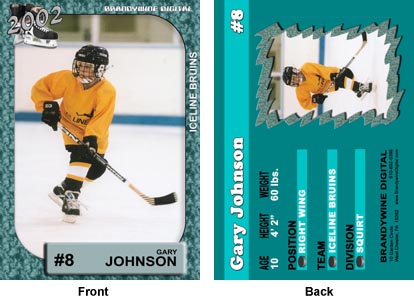
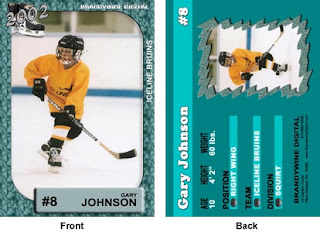
Trading Cards: Students may complete trading cards for MORE THAN JUST athletes, although athletes are the ones that FIRST come to mind. If doing trading cards, you MUST select a minimum of 4 different cards to create. You should think of eras in your person's life that can be represented by different cards. If you are doing your research on Steve Jobs, perhaps you would create a the following cards:
Rookie Card: representing him as a student at whatever age he started tinkering with electronics/programming,
College Career Card: representing his "very unique" college career,
Major League Card: when he finally got Apple "back" & was a "major player"
A Hall of Fame Card: how he will be remembered
Be sure to include SIGNIFICANT and interesting information based on what REAL trading cards have on them...
ONLINE trading card maker
Wednesday, April 10, 2013
Genres of Writing-- The NOTES page
You should have started and are about ready to FINISH your artifacts by this point. With that being said, you really need to think about in which genre each belongs. For example, if you wrote a diary entry, it would fall under a different genre than would a wanted poster or some sports trading cards. Look at the sample list & descriptions of writing genres, and see if you can place YOUR particular artifact into one of the broader genres and a sub-genre (it's probably easier to do the sub-genre first then the main genre...)

Where would you put the following types of artifact?
Memoir/Journal/Diary
Ad/Wanted Poster/etc.
A Brief List of Sub-Genres (from http://multigenre.colostate.edu/genrelist.html)

EXPOSITORY--a genre of writing that informs, describes, or explains with text types such as: autobiography, biography, descriptive, essay, experiment, informational report, and media article
NARRATIVE--a genre of writing that entertains or tells a story with text types such as: adventure, fairy tale, fantasy, historical fiction, mystery, personal narrative, realistic fiction, and science fiction
PERSUASIVE--a genre of writing that attempts to convince readers to embrace a particular point of view with text types such as: advertisement, editorial, persuasive essay, political cartoon, pro/con, and review
PROCEDURAL/HOW TO--a genre of writing that explains the instructions or directions for completing a task with text types such as: experiment, how to, and recipe
TRANSACTIONAL--a genre of writing that serves as a communication of ideas and information between individuals with text types such as: business letter, friendly email, friendly letter, interview, invitation, postcard, speeches, and weblog entry
NARRATIVE--a genre of writing that entertains or tells a story with text types such as: adventure, fairy tale, fantasy, historical fiction, mystery, personal narrative, realistic fiction, and science fiction
PERSUASIVE--a genre of writing that attempts to convince readers to embrace a particular point of view with text types such as: advertisement, editorial, persuasive essay, political cartoon, pro/con, and review
PROCEDURAL/HOW TO--a genre of writing that explains the instructions or directions for completing a task with text types such as: experiment, how to, and recipe
TRANSACTIONAL--a genre of writing that serves as a communication of ideas and information between individuals with text types such as: business letter, friendly email, friendly letter, interview, invitation, postcard, speeches, and weblog entry
Where would you put the following types of artifact?
Memoir/Journal/Diary
Informational--Anything News-Related, Website or other Web-based Artifact, Obituary, Time Line, etc.
Ad/Wanted Poster/etc.
Creative Writing/Poetry--flash fiction, poem, etc
A Brief List of Sub-Genres (from http://multigenre.colostate.edu/genrelist.html)
- Journal Entries
- Personal Letter
- Greeting Card
- Schedule/Things to Do List
- Inner Monologue Representing Internal Conflicts
- Classified or Personal Ads
- Personal Essay or Philosophical Questions
- Top Ten List/Glossary or Dictionary
- Poetry
- Song Lyrics
- Autobiographical Essay
- Contest Entry Application
- Business Letter or Correspondence/Persuasive or Advocacy Letter
- Biographical Summary
- Critique of a Published Source
- Speech or Debate
- Historical Times Context Essay
- Textbook Article
- Science Article or Report/Business Article or Report
- Lesson Plan
- Encyclopedia Article
- Short Scene from a Play with Notes for Stage Directions
- Short Scene from a Movie with Notes for Camera Shots
- Dialogue of a Conversation among Two or More People
- Short Story
- Adventure Magazine Story
- Ghost Story
- Myth, Tall Tale, or Fairy Tale
- Talk Show Interview or Panel
- Recipe and Description of Traditional Holiday Events
- Classroom Discussion
- Character Analysis or Case Study
- Comedy Routine or Parody
- Liner Notes
- Picture book
- Chart or Diagram with Explanation and Analysis
- Brochure or Newsletter
- Time Line or Chain of Events
- Map with Explanation and Analysis
- Magazine or TV Advertisement or Infomercial
- Restaurant Description and Menu
- Travel Brochure Description
- How-To or Directions Booklet
- Receipts, Applications, Deeds, Budgets or Other Documents
- Wedding, Graduation or Special Event Invitation
- Birth Certificate
- Local News Report
- Pop-Up book
- Review and Poster for a Movie, Book, or TV Program
- Board Game or Trivial Pursuit with Answers and Rules
- Comic Strip or Graphic Novel excerpt
- Power Point Presentation
- Informational Video
- Web Site
- Future News Story
- Letter to the Editor
- Newspaper or Magazine Feature/Human Interest Story
- Obituary, Eulogy or Tribute
- News Program Story or Announcement
- Tabloid Article

Still thinking about the type of genre in which you want to write? Here are some ideas and reasons to pick different genres...
Sunday, April 7, 2013
The "Dear Reader" Letter-- Revisited
Although this is meant to be a post to Mrs. Lockwood's students, all of you who are YET to embark on the journey of writing your "Dear Reader" letter may benefit from this posting, so I am including it in the blog.

I posted this on Edmodo--
I am almost done annotating the "Dear Reader" letters that have been shared with me on Google Docs. If you have not shared yet, I cannot annotate for you. You will get credit but not the benefit of my feedback. Here are some general findings.
#1-- MANY of you forgot to include the date. You can do a traditional friendly letter or a block style letter-- either is fine, but you must follow a consistent format for either. See links below for both styles-- be consistent. I don't care if your return address is present, but I DO want a proper salutation, closing, signature, etc...
business style letter (block format)
http://1.bp.blogspot.com/-FoJeA_tBz4M/ULqNNt2...
friendly letter (with closing right aligned, address right aligned, etc)
http://www.teachersclubhouse.com/images/sampl...
2--Several of you forgot to "thank your audience for reading" in an appropriate manner. Not only is the required for MY expectations, but this is an essential and authentic part of business writing. If I am "formally" communicating with a superior or colleague of mine, I always thank them in advance for taking the time to read what I am writing. It is considered to be in "good form" and is JUST WHAT YOU DO! This is an exercise in common business etiquette and should NOT be ignored.
speaking presentations -- dos and don'ts
Proper format for written communications-- tips and pointers
3-- TOO many of you are using vague words like "a lot", interesting, fun, lots, etc when you are discussing the types of information you are sharing and you found in your research. Remember-- your dear reader letter is an introduction to your project and should draw your audience in. You can allude to your assertion & your findings here. It should be written in past tense since your research will be DONE by the time you do your final draft--- (I had hoped to find.... I had set out to learn.... My goal was to learn even more about how..... ).
interesting adjectives to replace DULL, BORING ones...
shake it up a bit-- step out and use spice, engaging, varied, CREATIVE words and phrases!
4-- You MUST mention the artifacts and how your research proved (or didn't prove) the assertion you made. What can your reader expect to read/learn? How did this project impact you as a researcher/learner? What did you find to be fascinating?
5-- There are WAY too many spelling/grammar errors. You need to READ your writing aloud to see if it is sensible. Also, by now, you SHOULD NOT be having run-on and fragment errors. You need to remember where to put a comma and where to use a semi-colon. Vary sentence structure to include simple, complex and compound sentences.
punctuation tips from THE OWL
I have addressed several of these issues in my annotations. Please revise and re-share... : )
In closing, remember-- your "Dear Reader" letter should reflect not only your findings, your artifacts and your assertion, but it should reflect YOU. Feel free to "be yourself"... to be witty, silly, eccentric, etc... but DO include all of the important (and required) elements. If you are having a hard time, look at the samples and ask for help! Additionally, remember past lessons on audience, tone, diction, inflection, etc...

I posted this on Edmodo--
I am almost done annotating the "Dear Reader" letters that have been shared with me on Google Docs. If you have not shared yet, I cannot annotate for you. You will get credit but not the benefit of my feedback. Here are some general findings.
#1-- MANY of you forgot to include the date. You can do a traditional friendly letter or a block style letter-- either is fine, but you must follow a consistent format for either. See links below for both styles-- be consistent. I don't care if your return address is present, but I DO want a proper salutation, closing, signature, etc...
business style letter (block format)
http://1.bp.blogspot.com/-FoJeA_tBz4M/ULqNNt2...
friendly letter (with closing right aligned, address right aligned, etc)
http://www.teachersclubhouse.com/images/sampl...
2--Several of you forgot to "thank your audience for reading" in an appropriate manner. Not only is the required for MY expectations, but this is an essential and authentic part of business writing. If I am "formally" communicating with a superior or colleague of mine, I always thank them in advance for taking the time to read what I am writing. It is considered to be in "good form" and is JUST WHAT YOU DO! This is an exercise in common business etiquette and should NOT be ignored.
speaking presentations -- dos and don'ts
Proper format for written communications-- tips and pointers
3-- TOO many of you are using vague words like "a lot", interesting, fun, lots, etc when you are discussing the types of information you are sharing and you found in your research. Remember-- your dear reader letter is an introduction to your project and should draw your audience in. You can allude to your assertion & your findings here. It should be written in past tense since your research will be DONE by the time you do your final draft--- (I had hoped to find.... I had set out to learn.... My goal was to learn even more about how..... ).
interesting adjectives to replace DULL, BORING ones...
shake it up a bit-- step out and use spice, engaging, varied, CREATIVE words and phrases!
4-- You MUST mention the artifacts and how your research proved (or didn't prove) the assertion you made. What can your reader expect to read/learn? How did this project impact you as a researcher/learner? What did you find to be fascinating?
5-- There are WAY too many spelling/grammar errors. You need to READ your writing aloud to see if it is sensible. Also, by now, you SHOULD NOT be having run-on and fragment errors. You need to remember where to put a comma and where to use a semi-colon. Vary sentence structure to include simple, complex and compound sentences.
punctuation tips from THE OWL
I have addressed several of these issues in my annotations. Please revise and re-share... : )
In closing, remember-- your "Dear Reader" letter should reflect not only your findings, your artifacts and your assertion, but it should reflect YOU. Feel free to "be yourself"... to be witty, silly, eccentric, etc... but DO include all of the important (and required) elements. If you are having a hard time, look at the samples and ask for help! Additionally, remember past lessons on audience, tone, diction, inflection, etc...
Friday, April 5, 2013
Parenthetical Citations (in-text citing of stuff you did not know on your own... just to be safe)
While you were doing your research, you took good notes & you recorded all of your sources in your bibliography and on your note cards... hopefully! NOW, when you are doing your narrative portion of your MGP-- the "official & traditional" portion of your research project, you will be so happy that you did all of that work. When you are sitting down to draft the narrative of the most significant portions of the person's life (you know, that one you researched) and you are trying to show how he or she BECAME that significant person that cosmically and amazingly affected the world like no other before or after him or her, you need to give credit to the sources from which you found the information. So, when you share something you did not know, you need to cite it in the text (right after the information you shared) by simply including the author's name and the page number on which you found that awesome information. If you found it on a website, the rules are different. Use the good old Purdue Owl site to help you... Also-- here is specific information for citing a video you found online (perhaps like at Youtube.)


We will do some practice in class, but you need be sure to cite EVERYTHING you did NOT know...
About.com also has some information on citations on their "homework" help site.
If you want to download an entire PDF file to help you, use this site.
My Sample Narrative
Look at it for two examples of citations--

Subscribe to:
Posts (Atom)